
Recurrent Adenocarcinoma of Lung
A 63 year-old housewife had a persistent dry cough, bloody cough at times, pain, and fullness in the chest when she stands up. At the time, she was misdiagnosed with a common cold, but later, diagnosed with second stage of adenocarcinoma of lung by means of radiology and biopsy during open thoracotomy.
After the operation, her surgeon-in-charge was very satisfied that the whole adenocarcinoma tissue of the lung was removed with clean edge and no cancer cells were left in her body. About 6 months after the operation, the patient underwent positron emission tomography study which showed new signs of re-current adenocarcinoma of the lung. The patient was recommended to have a biopsy pathology of lung tissue under anesthesia. The final reports confirmed the recurrence of adenocarcinoma of the lung.
She then had received targeted drug therapy, but one month later, she developed general rashes, face erythema, folliculitis of scalp, nail groove and foot groove inflammation and ulceration, posterior cervical lymph node enlargement, and other complications. The patient felt very weak and was unable to perform daily tasks. The squamous cell carcinoma antigen (SCC), carcinoembryonic antigen (CEA), cytokeratin 19 fragments (CYFRA 21-1), and cancer antigen 125 (CA-125) all increased to abnormally high values. The patient had to look for the symptomatic treatment to alleviate her symptoms such as eating anti-cancer foods; unfortunately those materials did not work.
The patient finally turned to alternative medicine, cell therapy specifically. Two weeks after treatment, her itching symptoms, scalp folliculitis, and facial red papule plaques decreased significantly. The patient's posterior cervical lymph node enlargement was also reduced; and the tumor markers of lung cancer, SCC, CEA, CYFRA 21-1, and CA-125 gradually decreased to normal values. Her symptoms such as cough, hemoptysis, chest tightness, and chest pain were no longer present. The patient's physical, mental and facial features improved greatly. Her immunity also improved as she noted that when she catches cold, she recovers within 36 hours. Her improvement indicates a great potential for this newly-developed medicine to help many other cancer patients.
Target drug therapy, combined with cell therapy, has the potential of destroying the surviving cancer cells in human body, prevent the recurrence of lung cancer, and finally improve the quality of life after surgery. The tumor markers (SCC, CEA, CYFRA 21-1 and CA-125) declined to their normal values is one of the evidences of its potential.
Lung cancer ranks as the second highest incidence rate of cancer next to prostate cancer in men and second highest in women next to breast cancer. Lung cancer has the highest mortality rate out of all types of cancers in both males and females.
CHMSUN is delighted to see the good results after learning the above-mentioned case of recurrent lung adenocarcinoma and her successful cell therapy. The committee believes that the combination of thoracic medicine and cell biomedical engineering technology could be an effective method of disease management including lung cancer. Furthermore, regular screening tests by using low-dose computed tomography (CT) of thoracic scanning and tumor marker test of lung can greatly improve the early detection rate of lung cancer in the future.
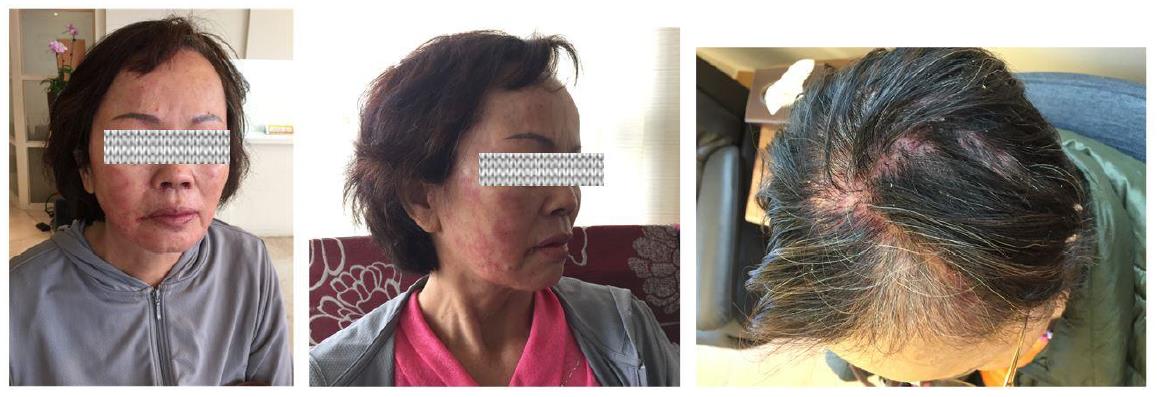
Before cell treatment
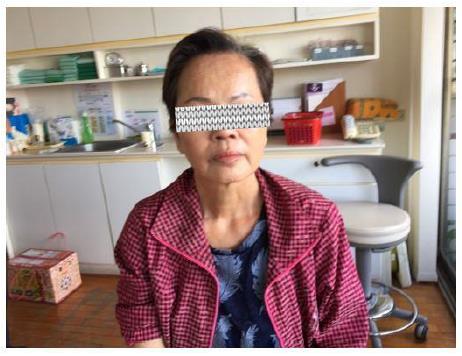
After cell treatment
This paper is for general knowledge and is not an academic publication.