
Dementia
Two years ago before patient visited stem cell specialist, a 66 year-old man with hypertension for 30 years began to suffer from apathy, memory loss, unwillingness to talk, difficulty in speech, frequent forgetfulness and inability to perform daily tasks. Sometimes he could answer questions correctly, but he always needed his wife to answer for him or remind him. His wife said, "My husband has really degraded. Sometimes he has problems thinking."
Medical angiography images reveal an extensive cerebral atrophy in his frontal and parietal lobes. There is phenomenon of decreased blood perfusion in the cerebellar hemisphere and different sites of the brain, which were checked by perfusion nuclear medical imaging.
Since all the medication did not work for him, his wife took him to receive cell therapy. After the first treatment, his mood improved and he was willing to talk to his family members. He was even able to play chess six hours later after cell treatment. His body no longer felt like a heavy burden and he began to sleep better at night. He was again active in his community. There, he interacted with other people as warmly as before, his wife observed that his cognitions and memory had restored completely. His wife was so happy and moved to tears because of her husband’s incredible improvement!
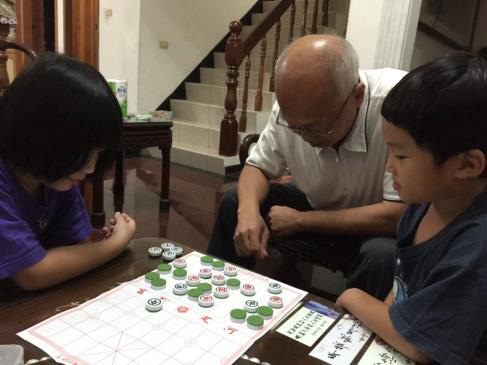
Based on mental assessment and diagnostic criteria for dementia, it shows that metabolic disorders, chronic hypertension, structural degeneration of the brain and other reasons may all impair the cerebral functions of a patient's cognitive, memory, language, execution, and attention.
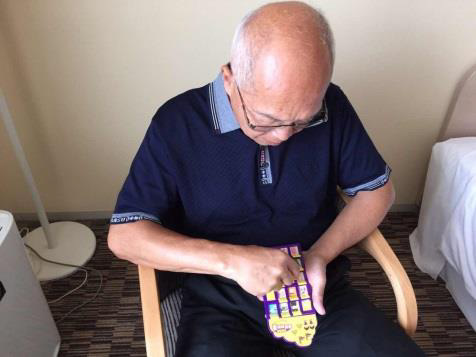
The ischemia of cerebral blood flow, subcortical small blood vessels, and impaired axonal transmission may lead to local inflammation accompanied by neurological symptoms. The degeneration of alba of cerebrum can result in cognitive impairment. Vascular sclerosis can cause mental retardation, disability, and cognitive impairment in the elderly. In these cases, the early intervention of cell therapy can result in satisfactory results. It is the development and progress of stem cell medicine that benefits patients.

After cell treatment
In 2015, statistics stated that there were 47 million dementia patients in the world, which accounts for about 5% of the world's elderly population. It is estimated that the number of dementia patients will increase to 75 million by 2030 and 132 million by 2050. About 9.9 million people worldwide suffer from dementia every year. In 2015, the cost of caring for dementia patients is estimated to be around $818 billion, equivalent to 1.1% of global gross domestic product (GDP). There are more than 5 million dementia patients in the United States and medical expenses costs $259 billion to care for these patients in 2017. It is projected to cost $1.1 trillion in 2050.
Dementia is a huge burden on the patients, their families and society. Many medical centers, medical specialists and scholars around the world have invested a lot of time, material and financial resources in studying the causes, pathology and treatment of dementia. Unfortunately, good results are very limited. The above case and its treatment has a potential to transform and offer a new method of clinical management of dementia. The Committee of Human Health and Medical Specialists of the United Nations looks forward to more breakthroughs in the treatment of dementia and the decrease of suffering of patients and their families by enabling them to enjoy a happier and better life.
This paper is for general knowledge and is not an academic publication.